Sismann G., Sismann M., Lequio M., Clayeux R., Versailles Mania, Édition Librairie des Musée, Trouville-sur-Mer, 2026, n°15.
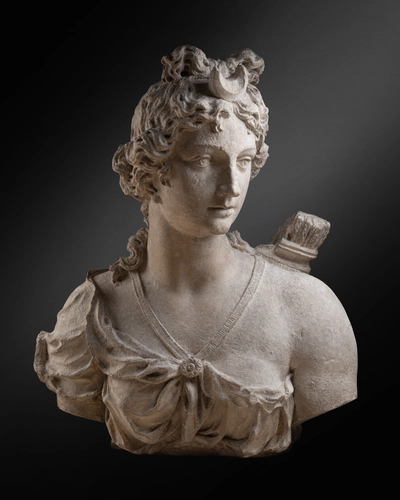
Diana is one of the most important figures in the Greco-Roman pantheon. A recurring motif in art since antiquity, she was soon associated with a feminine ideal. Reviving this trend during the Renaissance, it was from this period that we began to see favourites or ladies-in-waiting in France depicted as Diana. Diane de Poitiers, mistress of Henry II, is undoubtedly the most famous. The 17th and 18th centuries saw this iconography flourish under the influence of Versailles, following the arrival at the palace of the iconic statue of ‘Diana the Huntress’, also known as Diana of Versailles, a gift from Pope Paul IV to Henry II. A Roman copy from the Imperial period (2nd century) of a Greek original, the work depicts the goddess Artemis in motion, her hand resting on the antlers of a small modern stag. Now on display in the Hall of the Caryatids at the Louvre Museum, the Diana of Versailles became the first ancient masterpiece in the royal collection and paved the way for a significant series of royal sculptures depicting the goddess in the classical style. Depicted here as a bust with a quiver and arrows on her back and the symbol of the Moon above her forehead, our Diana the Huntress is part of this type of allegorical, classical-style sculpture that adorned the gardens and exterior of the Palace of Versailles around the years 1670-1690. The fashion for the huntress Diana spread to the surrounding palaces of the same period and was notably adopted at Marly. Undoubtedly originating from a palace decoration scheme and consistent with the style of royal commissions at Versailles, our bust of the huntress Diana is a fine example of a garden sculpture in the style of the marmorean sculptures of the Louis XIV era, which drew on classical antiquity. Adorned with flowing, billowing drapery and wearing the characteristic chignon seen on the Capitoline Venus and the Belvedere Apollo, it evokes the aesthetic of the Diana of Versailles, attributed to François Girardon and also carved in stone...