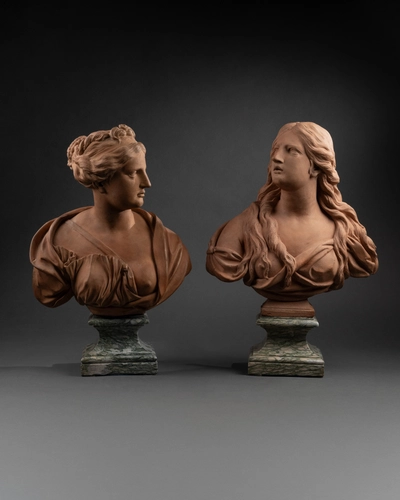
Galerie Bellanger, "La femme symbole dans la sculpture", octobre 1988
Thermoluminescence testing and full entry available upon request
This striking pair of terracotta busts offers an original embodiment of the two major aesthetic currents that shaped French sculpture during the Grand Siècle: on one hand, the classical impulse, marked by restraint, balance, and the ideal of antiquity; on the other, the baroque spirit, vibrant with emotion, mystical fervor, and dramatic intensity. Beneath its controlled ideal of beauty, the first bust—rich in classical references—may represent the goddess Diana, giving form to the archetypal figure of classical femininity: nobility, reserve, and formal perfection. The second, more expressive and sensual, depicts a figure in ecstasy—likely a penitent Magdalene or Saint Agnes—crafted in a distinctly baroque idiom, nourished by Roman art and the flourishing works that followed Bernini’s influential visit to Versailles in the service of the Sun King. Signed Rislé fecit and dated 1691 and 1696 respectively, these busts are the work of a still-enigmatic French sculptor. Their forms, steeped in the aesthetic vocabulary of Louis XIV’s Versailles, suggest possible direct or indirect ties to the royal workshops. Although not conceived as a pair at the time of their creation, the stylistic complementarity and formal harmony of the two works reveal a deliberate intention of dialogue—likely the result of a later assemblage by a discerning collector. Together, they offer a compelling synthesis of seventeenth-century sculptural trends: classical rigor and baroque vitality, the legacy of antiquity and sacred emotion. The ensemble invites contemplation of the richness and complexity of the Grand Siècle and stages a timeless dialogue between the eternal polarities of the human soul: thought and feeling, the pagan and the sacred, the virgin and the fallen woman.