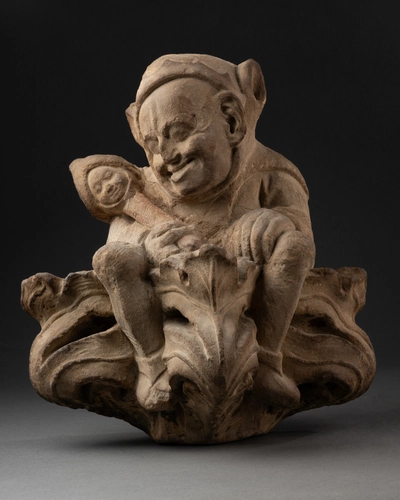
A vibrant character and iconic figure of the Middle Ages, the fool both fascinates and unsettles. Recently brought into the spotlight by a major exhibition at the Louvre, he embodies in turn the madman who denies God, the sinner overwhelmed by his passions, or the biting critic of established order. This striking sculpture, carved in Vosges sandstone typical of the building sites around Colmar, offers a lively interpretation: a grimacing jester, wearing his animal-eared cap, brandishes his marotte — a mock scepter in his own likeness — and sits, not without irony, atop a “choux frisé”, a vegetal motif emblematic of the Flamboyant Gothic style.
This motif imparts a unique elegance to our work and an exceptionally organic character. Within a vast iconographic corpus that favors wood—chosen for its accessibility and low cost—to bring this popular figure to life (beam, stalls…), our sculpture stands out through its noble material, refined craftsmanship, and ornamental exuberance, suggesting a prestigious commission. Far from being a whimsical standalone piece, this figure was originally part of a larger architectural setting — a façade, porch, rood screen, or niche — within a religious or civic building in the 15th century. By inserting this playful image into a codified space, this rare sculpture both provokes and invites reflection. Witty and deeply meaningful, it exemplifies the visual ingenuity of the late Middle Ages and its taste for controlled irreverence — a means to expose, through laughter, the follies of the world.